Is the lighting in work and study areas adequate?
Schools have started, students have returned to their studies, and for many working-age adults, summer vacation is over. Everyday life once again means spending more time with books, screens, and desks. At the same time, the days are getting shorter, and there’s less and less natural light. In the summer, you might not even think about the lighting at your work or study space, but now is a good time to check what kind of light you’re spending your long daily hours under.
Good lighting isn't just about seeing better. It also affects how pleasant it feels to work, how well we can concentrate, and how well we can cope with long days in front of screens.
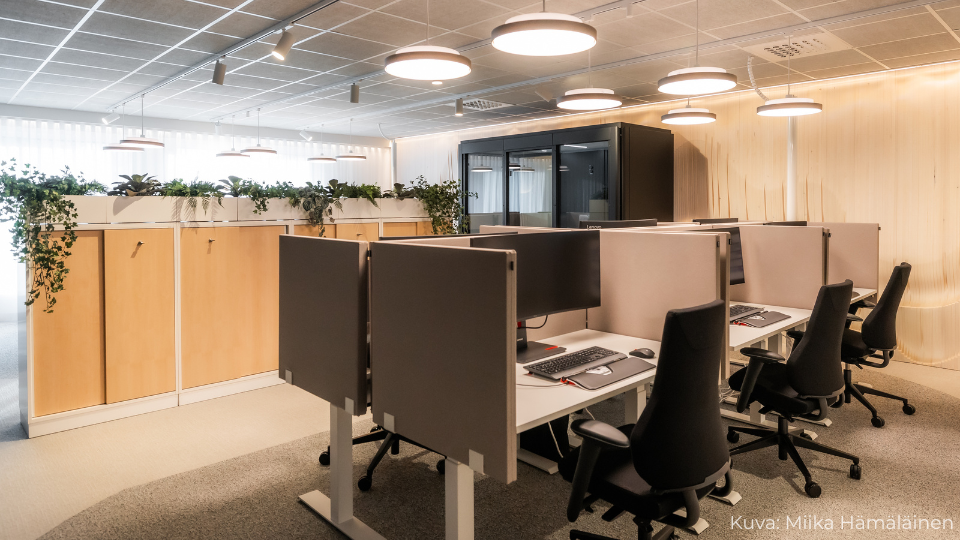
Is there really enough light at my workstation?
In practice, good task lighting means that you can easily read, write, and work at your desk without having to strain your eyes constantly.
In many rooms, the only light fixture is located in the center of the ceiling. Although this might seem to provide enough light for the entire space, the workstation can still be poorly lit if the light comes from the wrong direction. For example, the person working there might cast a shadow on the desk surface if the light fixture is positioned behind them.
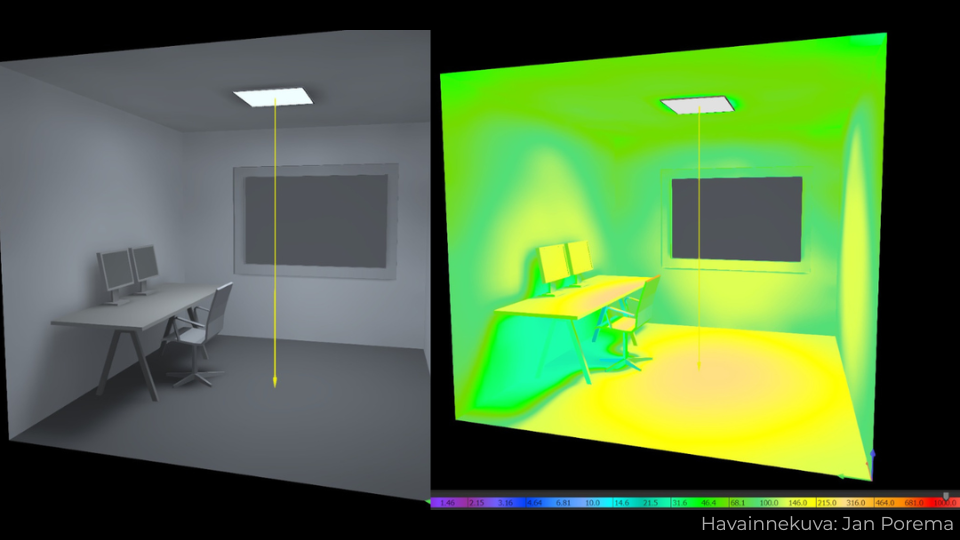
A light source in the center of the room is a very traditional solution. This type of lighting is rarely effective at maintaining work performance and promoting well-being, even if the quality and quantity of the light itself appear to be sufficient.
The most important thing is that the light is distributed evenly across the desk and in front of the worker. The most effective solution is to position the light as close as possible to the actual work area. A linear light fixture mounted above the desk or spotlights that cast a wide beam effectively illuminate the desk surface while also providing light for the face. If it’s not possible to add a light fixture to the ceiling, a high-quality desk lamp is a good alternative.
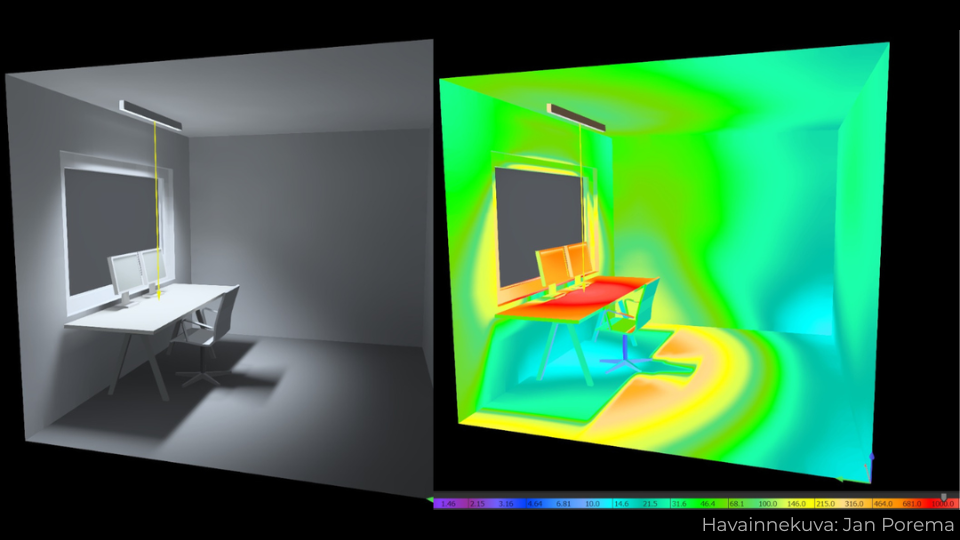
A linear task light mounted above the desk is a simple and effective solution for lighting a workspace.
You can also try to reflect light off a light-colored wall. For example, light directed at a white wall is reflected back as soft light onto both the desk and the worker’s face. The color of the wall is very important, as a light-colored surface reflects significantly more light than a dark one.
The light should also be pleasant
Good task lighting should not cause glare, strain the eyes, or create distracting reflections on the screen. The light source should not shine directly into your field of vision, nor should the light be reflected off the screen into your eyes.
It’s a good idea to make the most of natural light, but at the same time, avoid situations where a bright window is directly behind the screen or where sunlight reflects distractingly onto the screen. Often, the most effective solution is to position your desk so that natural light comes in from the side. This allows daylight to reach your workspace without a significant difference in brightness between the screen and the background. If necessary, you can control the amount of light and direct sunlight with curtains or blinds.
The absence of flickering is also important. Not all flickering is necessarily visible to the naked eye, but it can still strain the eyes and contribute to headaches or a feeling of fatigue. You can sometimes detect flickering by looking at the light fixture through your phone’s camera, but the surest way to determine this is by checking the fixture’s technical specifications or using a high-quality light meter.
If you use multiple monitors at your workstation, it’s a good idea to experiment with the lamp’s position and direction: there should be no distracting reflections on the screen when you’re in a normal working position. If you have to squint to see the screen, the difference in brightness between the background and the screen is too great.

Lighting should adapt to the time of day
The same workspace can be used for work in the morning, homework in the afternoon, and studying in the evening. That's why the lighting should be able to adjust as the day progresses.
During the day, bright and sufficient light helps maintain alertness and concentration. However, if your workspace is located, for example, in a bedroom or another room where you also relax in the evening, the same bright work light is no longer the best option at the end of the day.
In such cases, adjustable lighting is particularly useful. Dimming alone makes it possible to have bright, effective task lighting during the day and to soften the lighting in the evening. If the light fixture also has color temperature control, you can use cooler, more invigorating light during the day and switch to a warmer tone in the evening that promotes relaxation.
This way, the same space can serve as an efficient place to work or study during the day and, in the evening, as part of the rest of home life.
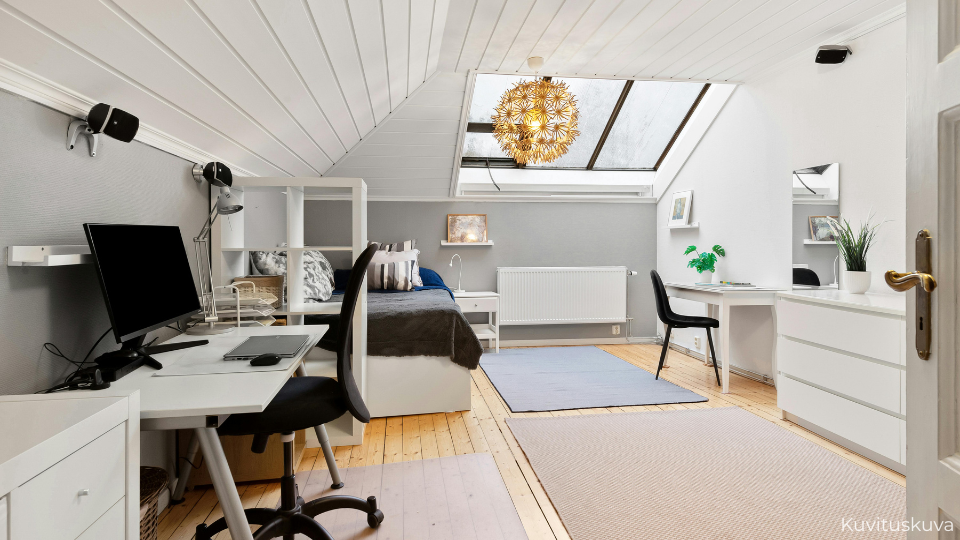
In this concise overview of work lighting, we’ve only scratched the surface! KVS lighting expert Jan Porema has written a comprehensive article on the topic, in which he discusses the effects of home office lighting, shares his own experience with changing lighting, and presents concrete ways to create effective workstation lighting.
Read the full article on LinkedIn ›
Do you need help designing good workstation lighting? KVS's experts are happy to assist you!