Light That Lives Alongside People
Few people realize that the light we’re exposed to in the morning can affect how easily we fall asleep that same evening—and even the quality of our sleep. Lighting doesn’t just affect us by determining how well we see. Light also influences our alertness, our circadian rhythm, and when our bodies begin to prepare for rest.
This very perspective is also highlighted in the latest episode of the “Huvila & Huussi at the Housing Fair” series, "The Future of Housing", in which Marja and Mikko explore homes where living has been approached from the perspectives of well-being, relaxation, and future-oriented solutions. One of the homes featured in the episode is Casa Onnenkivi, whose lighting was implemented using KVS solutions and Casambi controls.
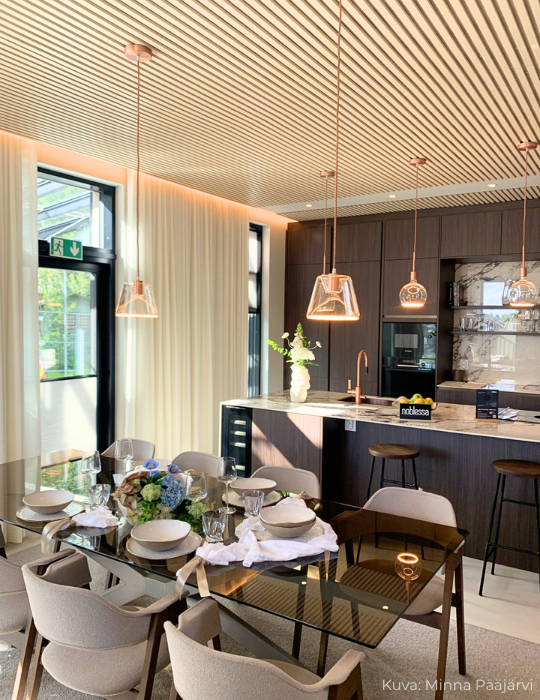
What does "human-centered lighting" actually mean?
Human-Centric Lighting, or HCL, is based on a simple idea: the same lighting is not optimal for people in the morning, during the day, and in the evening.
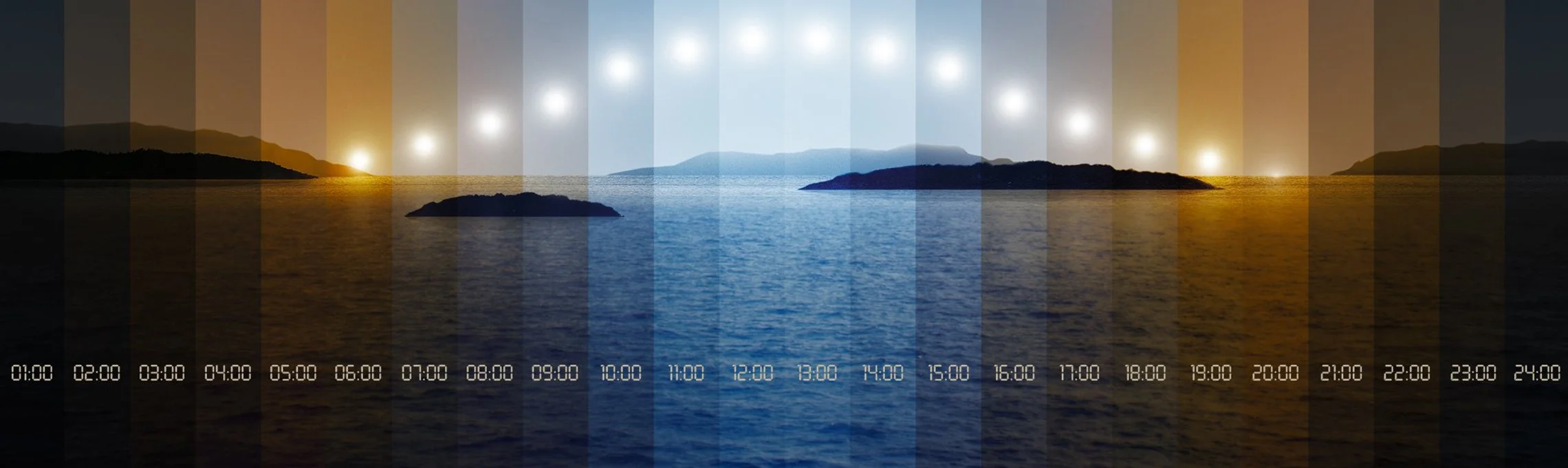
In nature, light changes constantly throughout the day. In the morning and during the day, we get more bright, biologically stimulating light. As evening approaches, the amount of light decreases and its tone becomes warmer. Artificial lighting at home and at work should be able to follow the same rhythm.
In the morning, you need enough high-quality light so that your body’s internal clock receives a clear signal that the day has begun. This helps boost alertness and synchronize your circadian rhythm.
During the day, the purpose of lighting is not only to provide good visibility but also to maintain activity and functional capacity.
In the evening, the situation is reversed. The amount of light should be reduced, and its tone should be warmer. Furthermore, bright light should not be directed straight into the eyes. This allows the body to gradually transition toward rest.
A blue light isn't simply good or bad
There’s a lot of talk about blue light, but the issue is often viewed in overly simplistic terms. In the morning and during the day, the blue-green wavelength range of light plays an important role in synchronizing the body’s circadian rhythm. The light-sensitive cells in our eyes react particularly strongly to light with a wavelength of around 480 nanometers.
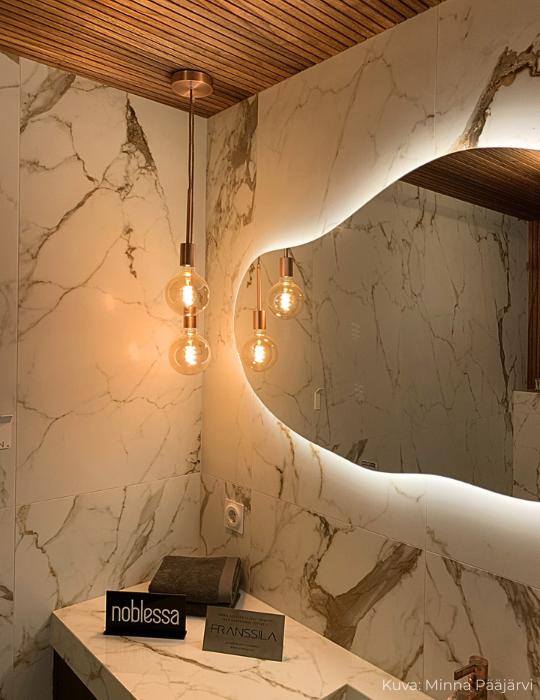
In the evening, however, the same biologically stimulating light can make it harder for the body to prepare for sleep. That’s why simply thinking that, for example, the blue light from a phone should be eliminated doesn’t solve the problem as a whole. A bright, poorly directed reading light or cold, harsh bathroom lighting can be just as significant an issue in the evening.
What matters most is the amount of light, its spectrum, its direction, and, above all, its timing.
In the dark north, the importance of lighting is emphasized
Finland’s starkly contrasting seasons highlight the importance of lighting. In the summer, there is plenty of natural light from morning until late in the evening, whereas in the winter we often wake up to darkness, and the brightest hours of the day may be spent indoors.
In this case, the role of artificial lighting in the home becomes more important. Just because there is enough light to see by does not necessarily mean that morning lighting effectively promotes alertness and supports the body’s circadian rhythm.
Good lighting, then, is not just about having enough light or a beautifully lit space. What kind of light we get, how much of it, and at what time of day are also essential factors .
At Casa Onnenkivi, lighting is an integral part of the overall living experience
What is particularly interesting about Casa Onnenkivi is that lighting is not viewed as a standalone technical solution, but rather as an integral part of the home’s atmosphere, everyday life, and well-being.
Casambi control allows you to manage your lighting for different situations and times of day. When combined with properly designed lighting, you can create a variety of lighting scenarios in your home, ranging from the brighter light of the morning to the calming glow of the evening.
At its best, human-centered lighting ensures that these two aspects do not compete with one another. Beautiful decorative lighting and lighting that supports human well-being are part of the same whole.
In the home of the future, light isn't just on or off. It adapts to people and the time of day.
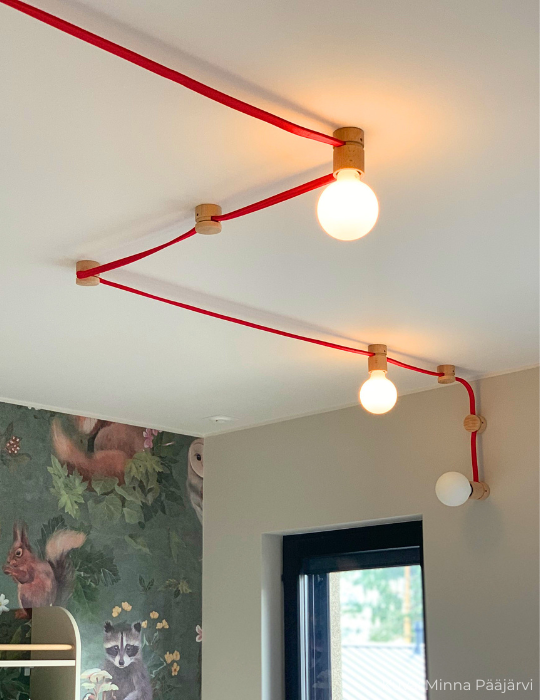
→ See Huvila & Huussi at the Housing Fair: The Future of Living
→ Check out Casa Onnenkivi’s lighting solution in our previously published newsletter
This newsletter is based on the "Valotuokio" articles by Jan Porema, a lighting expert at KVS.